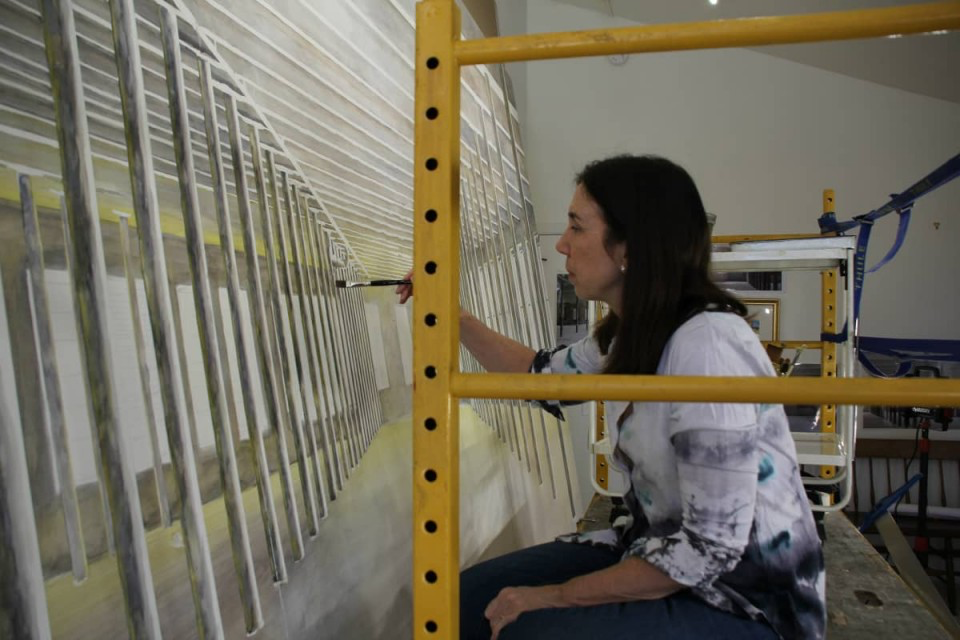
The moment Barbara Ernst Prey applies a brushstroke to paper, the swath of color she leaves behind is something simultaneously both brand new and old. “I paint every day with my mother’s brushes,” the artist says from her bright third-floor studio in the turret of a Victorian house on Long Island’s North Shore. “My mother was head of the design department at Pratt (Institute) and she knew to take very good care of her brushes. I really can honestly say that I feel her spirit in them. We would often paint together, en plein air especially, and those brushes I watched her work with, I now work with.”
Prey’s brushes are always in action, especially as she applies watercolors to large surfaces of paper—the medium for which she is best known. Prey may be one of America’s most visible artists, in that her work is shown not only in galleries and museums, embassies and presidential libraries on earth, but also, in a way, in outer space. Among her vast palette of awards and accolades, Prey was commissioned by NASA to execute paintings for their permanent collection—ones that virtually redefine life on this planet. Her depiction of the Columbia astronauts who perished in the disaster in 2003, along with works showing the international space station and the shuttle Discovery are part of the NASA Art Program tradition, one in which Norman Rockwell and Robert Rauschenberg were also invited and participated.
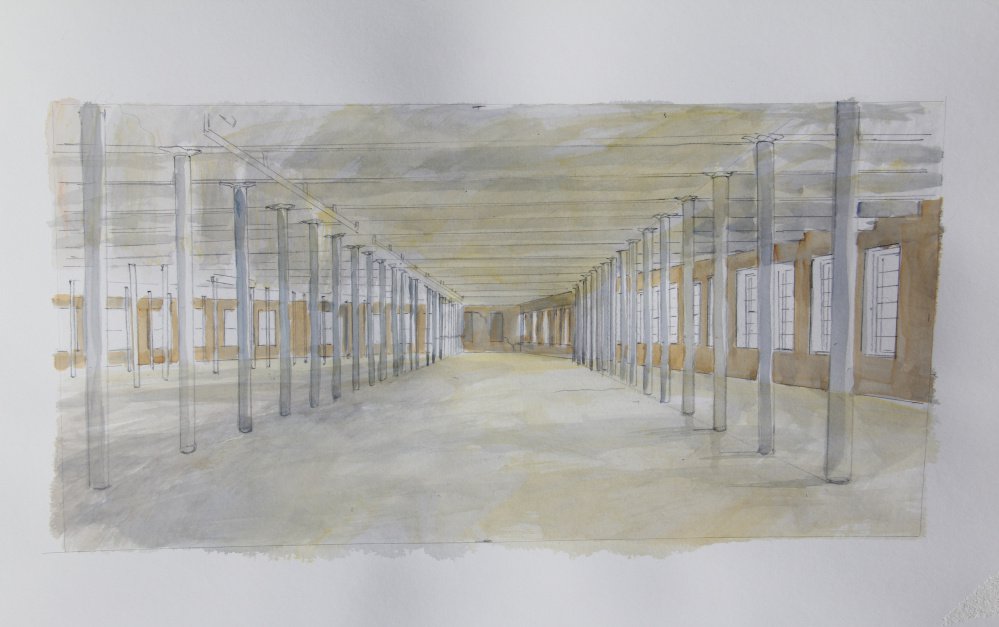
There are few artists working today of whom people ask for their autograph, but Prey is one of them. And she is used to being among the well known and well-pedigreed (collectors of her work include members of the Mellon, Rockefeller and Phipps families). President George Bush commissioned her to paint the official White House Christmas card and when Prey was only seventeen, she sold two works to then New York Governor Hugh Carey. Her paintings, chiefly landscapes, which she insists “hover between representation and abstraction,” are decidedly accessible and beautiful, certainly the best attributes of any good representational art. When asked why her typical large-scale scenes stand out from other artists who might paint similar scenes—rowboats bobbing in a harbor, winter sunsets in Maine, the interiors of New England meeting houses coursed by beams of sunlight, American vernacular houses on country roads, marshlands, fields ablaze with autumnal color—Prey says, matter-of-factly, “I like to think my work is really good. I’ve been described as an artist’s artist, though I know I wouldn’t be regarded as that were it not for my mother. She had such high standards for her art. I grew up in such an artistic home, with my mother hanging reproductions all over and taking me to all of the museums. I wouldn’t be the artist I am today without those experiences. My mom really helped inform my vocabulary.”
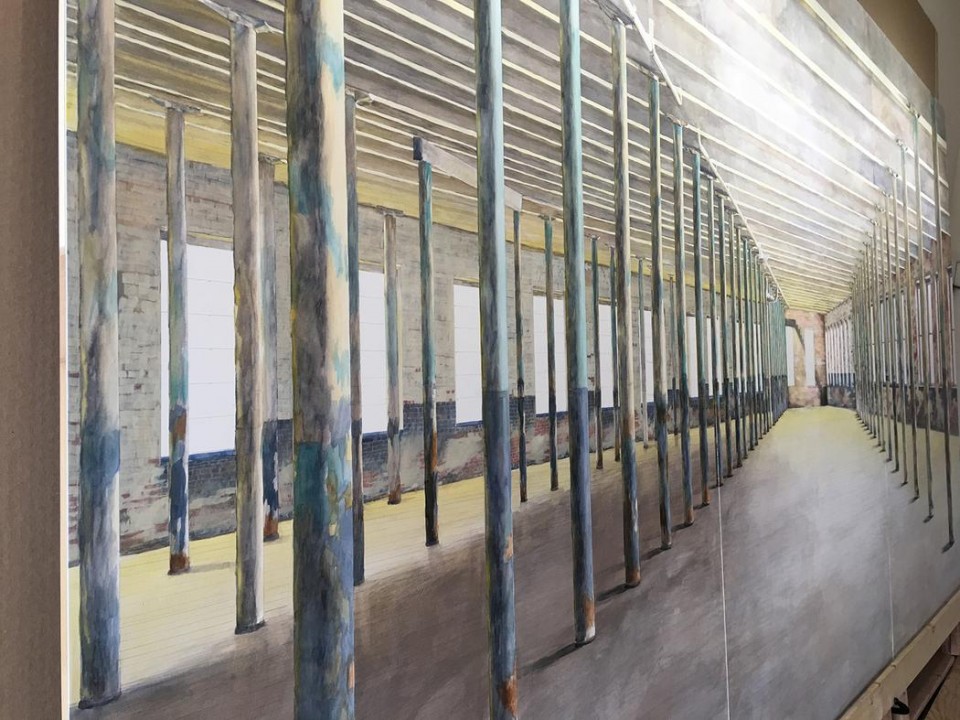
But still, Prey’s fame and sheer popularity as an artist derives from other traits, too, the chief one being her use of color. While watercolors are often noted for their muted cast on paper, Prey’s works dazzle with color, as if she is some kind of alchemist of the medium, able to transform a particular hue into a bolder, deeper, almost three-dimensional version of itself. “My work is all about color,” she admits. “Color speaks to your soul. No one else does what I do, which is use a saturation of color. I’ll labor on a work, applying layers and layers—not only of color, but also meaning.”
Indeed, the hues of a patchwork quilt drying on the line in her White Wash, the blocks of colors of grasses fronting the lighthouse in Quadricentennial and the cobalt water and bright yellows of her Bonfire are so dense with hue that the works verge on becoming something unreal, not of this world, yet they remain rooted in reality. “I’m always pushing with the colors,” says Prey, “but also taking on traditions and staying true to them, akin to Winslow Homer.” She recalls an early admiration for the works of Maxfield Parrish, a colorist extraordinaire. “But when I really started looking at his works up close, I thought, no, the colors can be too strong. Of course, he was an illustrator, too, and that’s the reason for some of his overuse of color.”